Solutions · Source Onboarding
Onboard a Source Without a Project Plan.
Point Amfelt at a source to discover its schemas, then have it recommend a table type for each object, which decides how it is historized. Accept the recommendations you agree with and the job is ready to run. During a run, the advisor can apply the answers it is most sure of. No connector code, no pipeline scaffolding.
How It Works
Three Steps From Credentials to Flowing Data.
Connect and discover
Point an agent at your source and run discovery. Amfelt reads its schemas, types, and relationships.
Review the recommendations
Amfelt recommends a table type for each object, profiling the data first on selected sources. You accept the ones you agree with, and the advisor can apply those it is most sure of.
Start the sync
The agent moves the data and checks each sync against the contract.
See It in Action
Data in Motion, Without Pipeline Code.
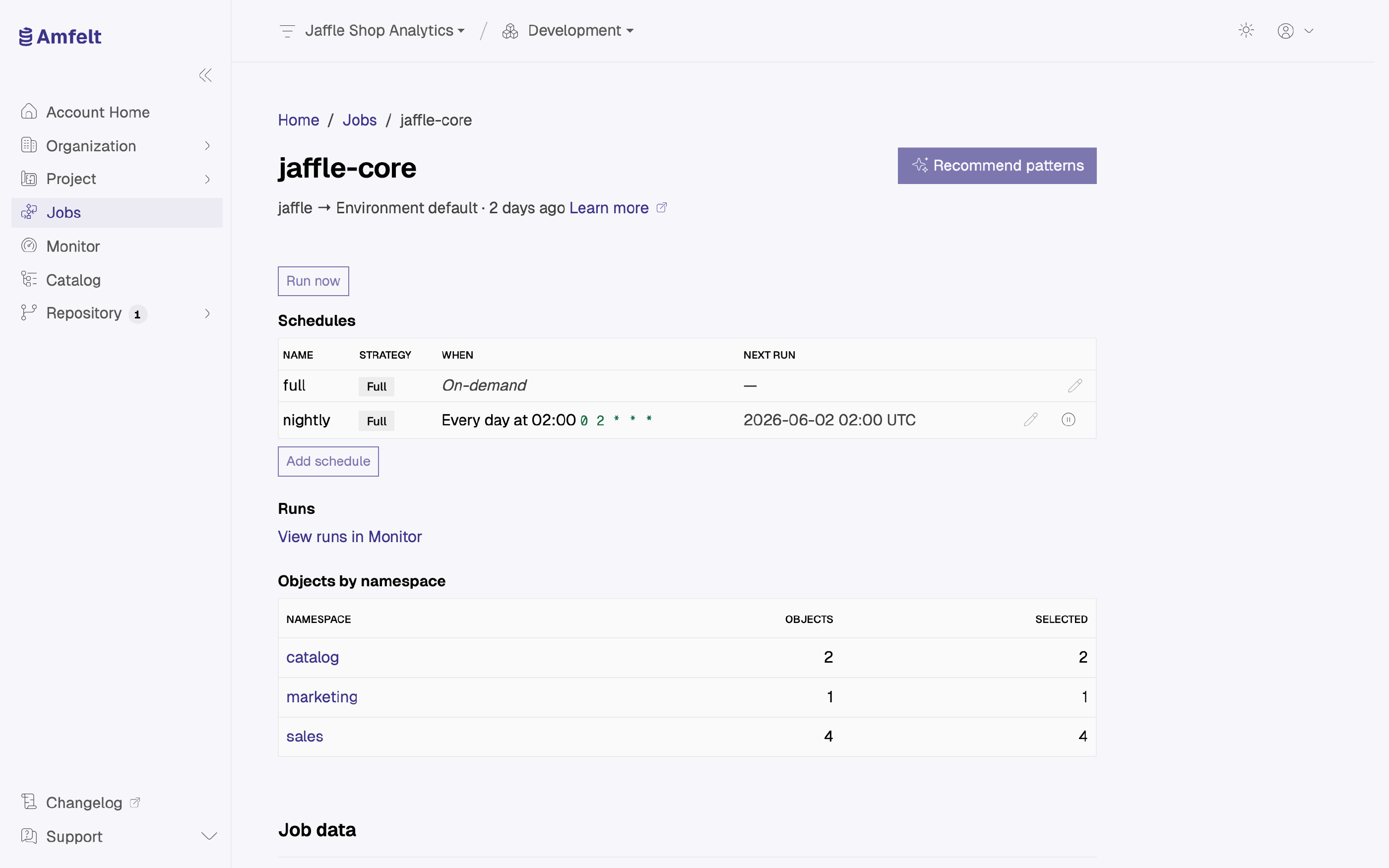
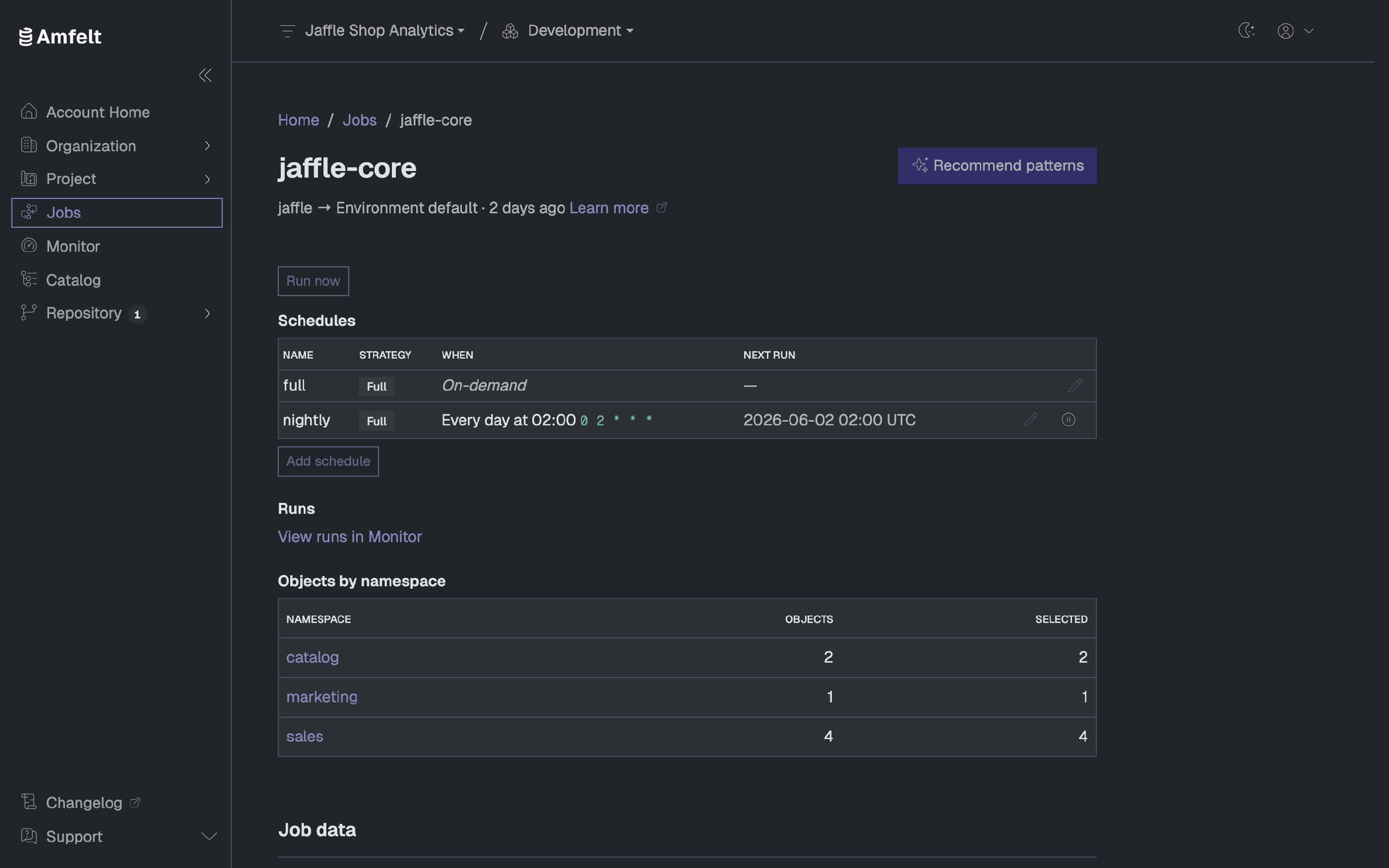
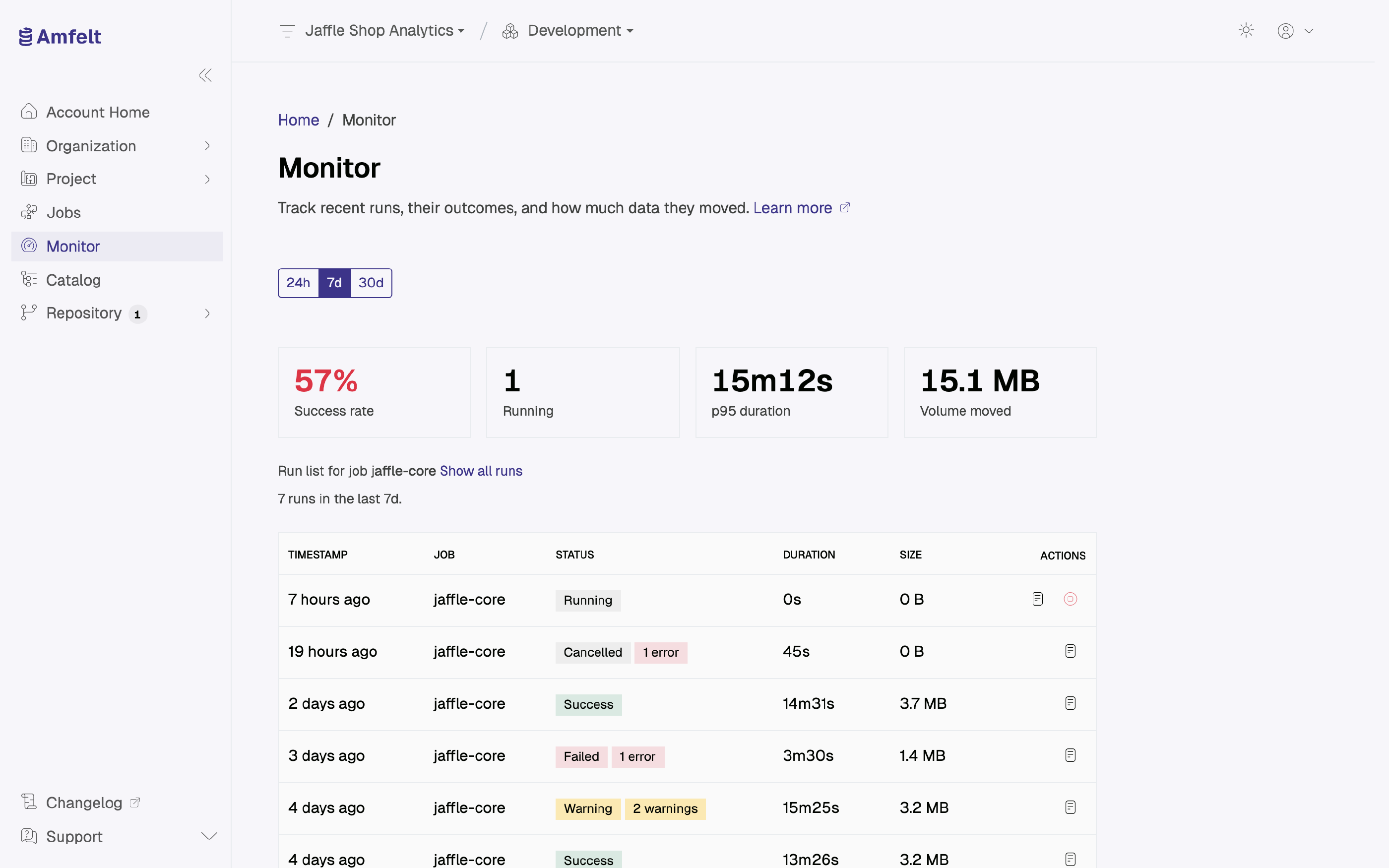
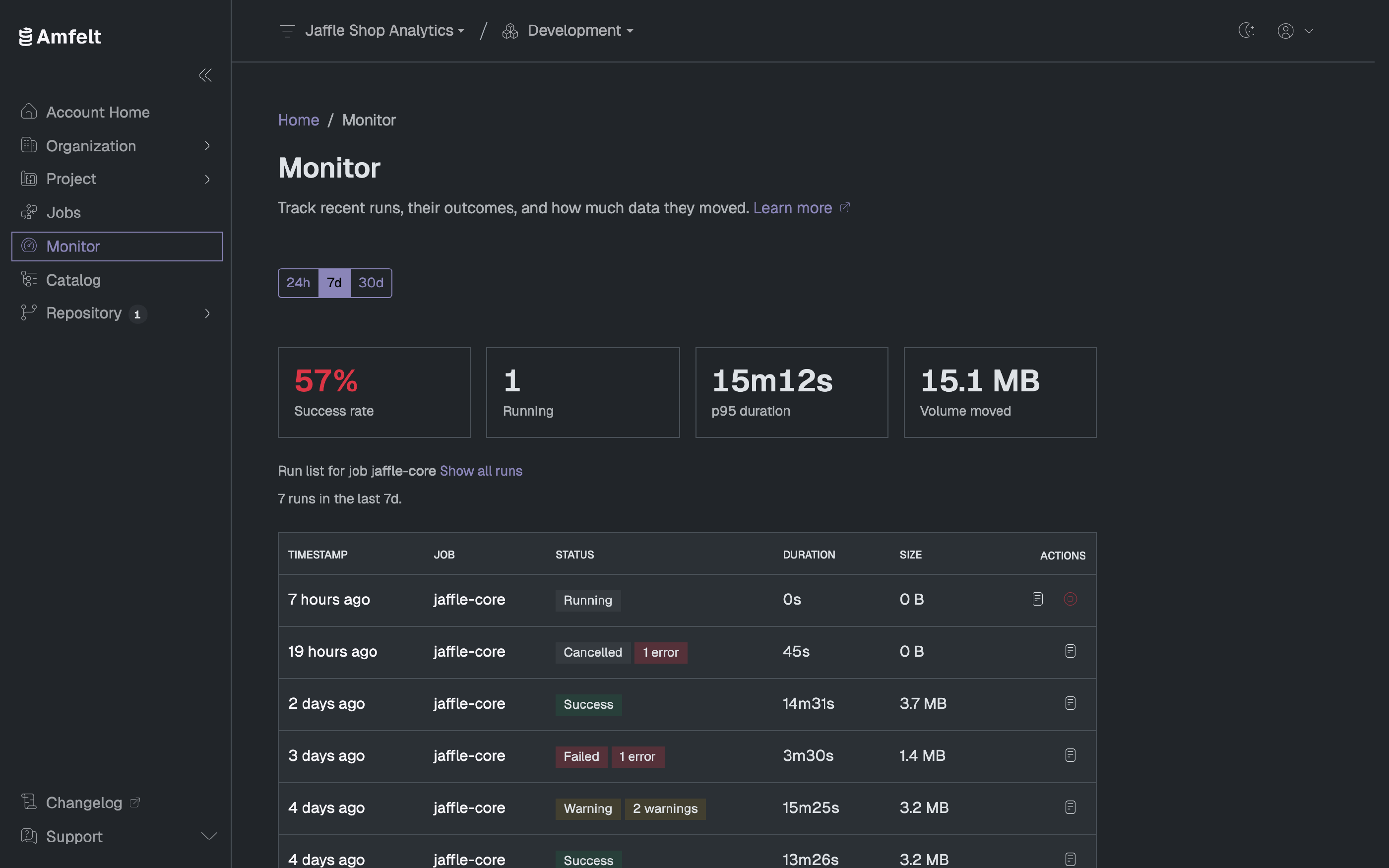
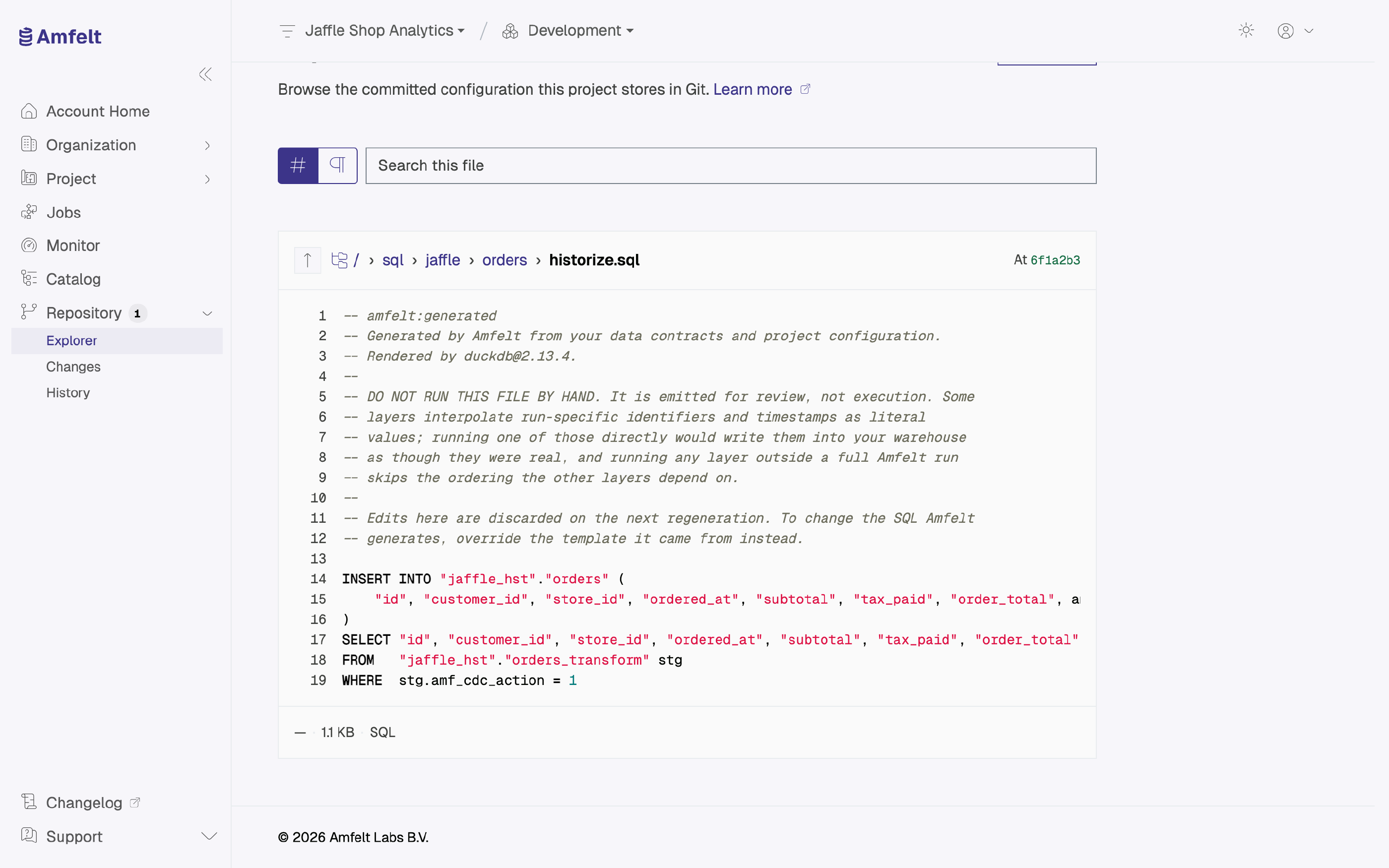
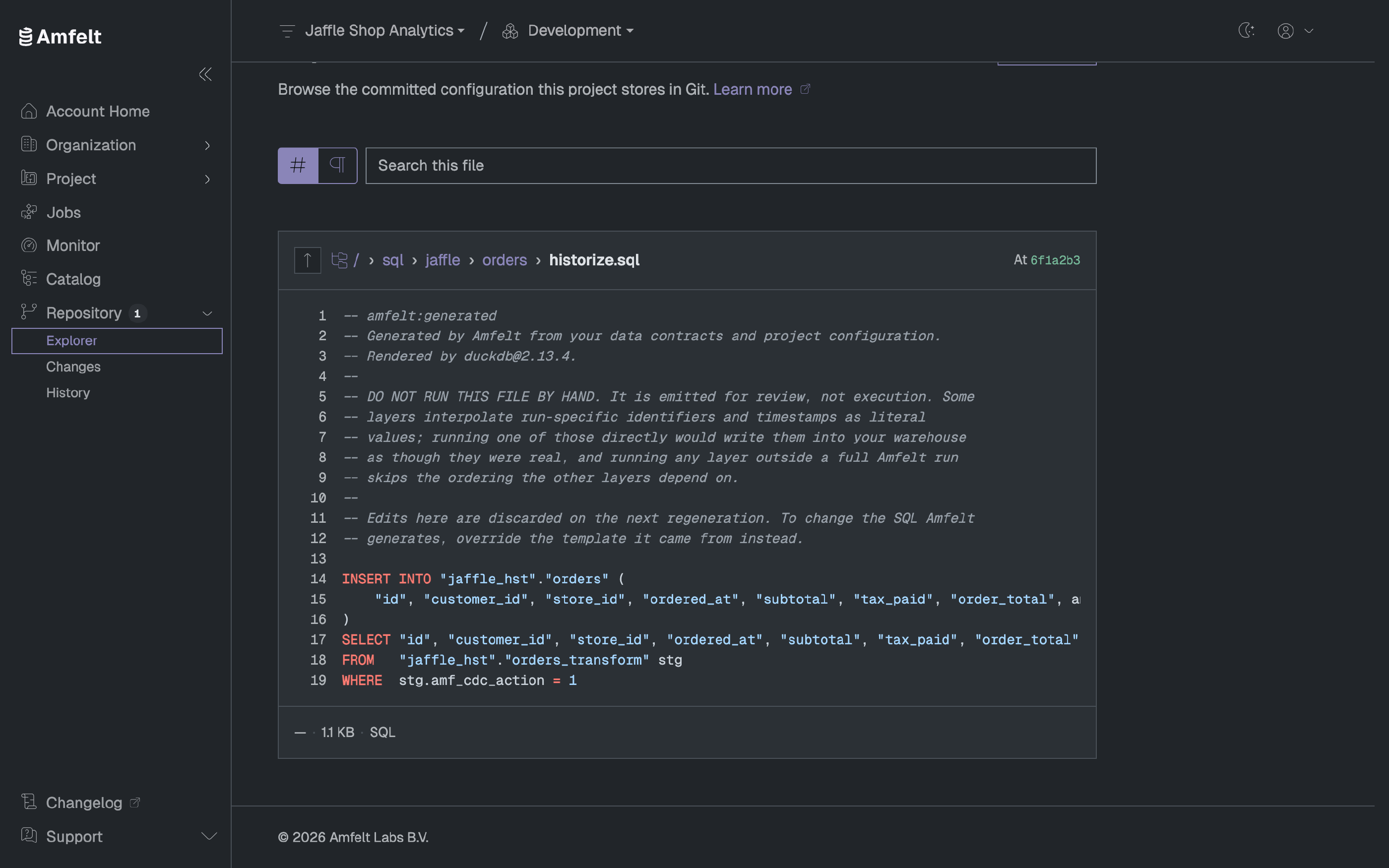
Movement from source to data platform, set up by reviewing recommendations instead of writing pipeline code.
From the Blog
Data Tools Are Getting Better. Data Teams Are Still Stuck.
The modern data stack keeps getting more sophisticated. Yet practitioners still spend much of their day maintaining pipelines. We are solving the wrong problems.
FAQ
Common Questions.
The catalog grows demand-first: early customers set the build order. Tell us what you need and it moves up the queue.
Agents run inside your network and move datasets directly from source to target, without passing them through the control plane. The control plane does receive some facts about your data: configuration, contracts, run results, and the property statistics the advisor uses, including the earliest and latest value of date and time properties.
Security & Trust
lists each.
Once the agent is deployed, you start discovery from the app and it runs on the agent without you watching. Recommendations follow, so most of the onboarding time goes into reviewing what Amfelt recommends.
Run discovery again and Amfelt compares the source with its contract, grading each change as a patch, minor, or major change. A likely rename is flagged as a candidate rename, never applied as one. The app lists drift for the development environment today, and applying changes automatically under a policy you set is on the roadmap.
Full loads ship today. Incremental loads, which read only the records that changed since the last run, are on the roadmap, and so is change data capture.
Bring New Sources Into Your Platform.
Join the waitlist to hear when Amfelt opens to more teams.