Solutions · AI-Ready Data
Data Your Team and AI Agents Can Trust.
AI agents are only as accurate as the context they are grounded in. Amfelt generates that context from the same sources and configuration that drive your pipelines: schemas, contracts, lineage, and documentation, from the platform that moves the data.
How It Works
Context Generated Alongside Your Pipelines.
Generate context as you build
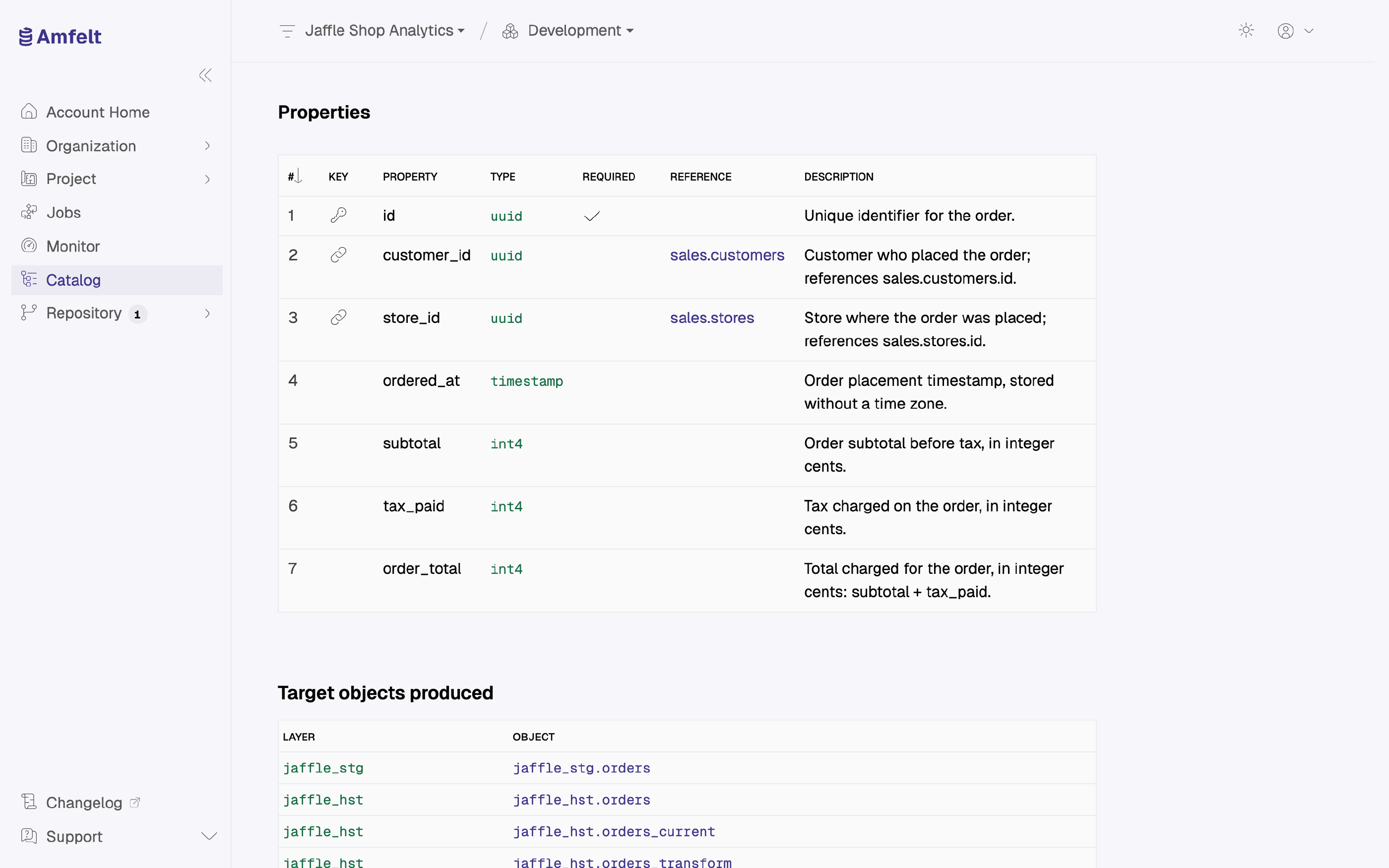
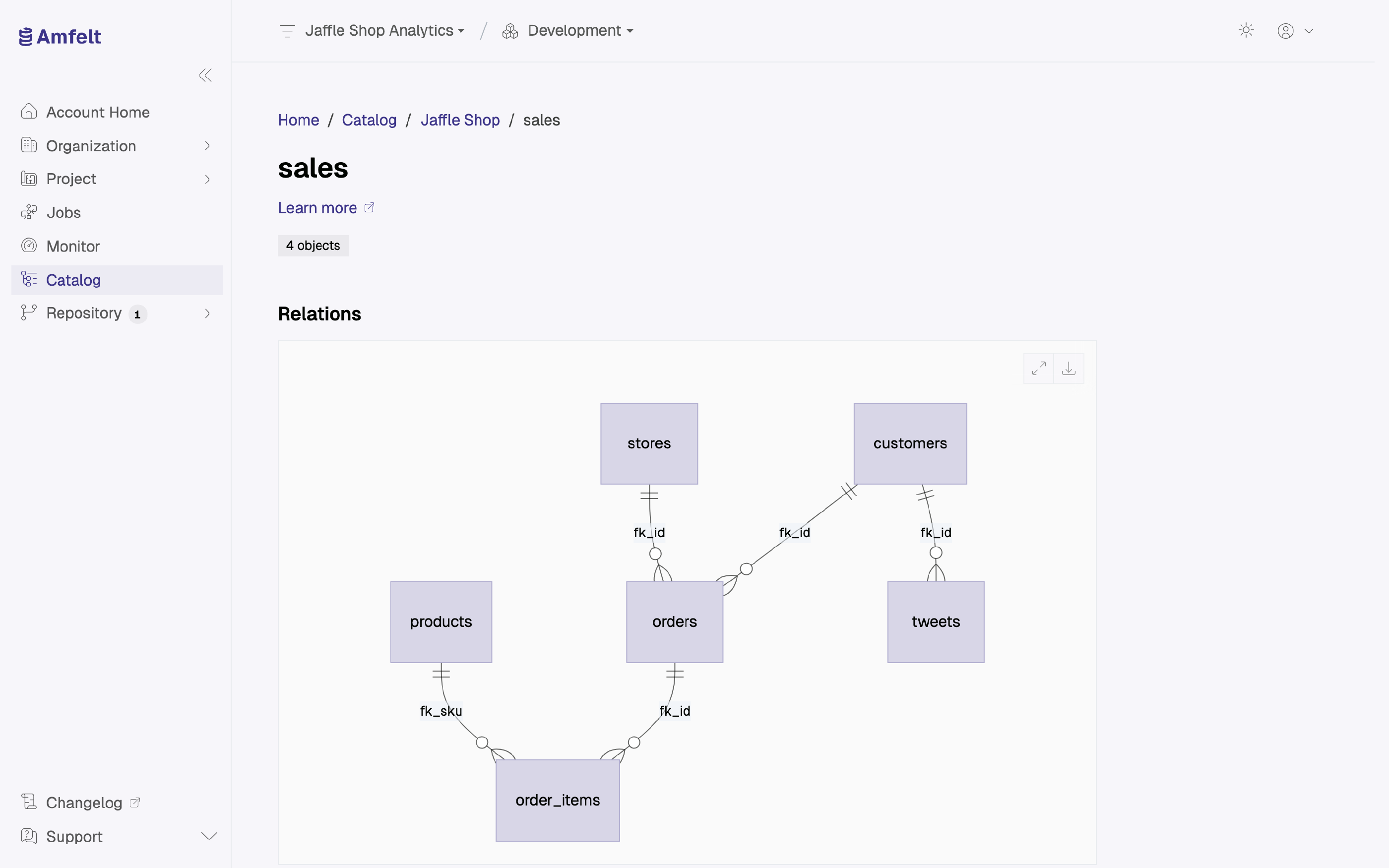
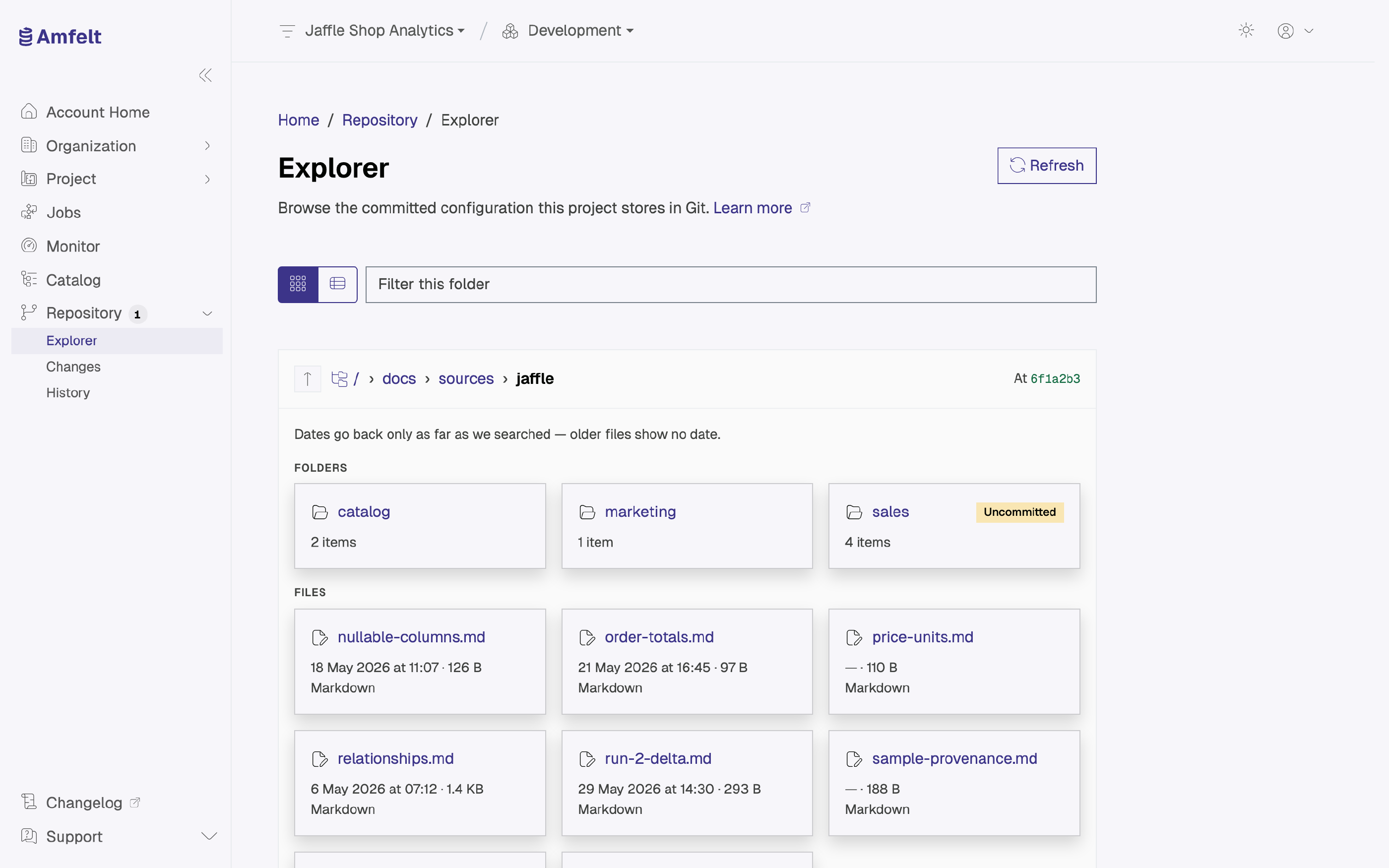
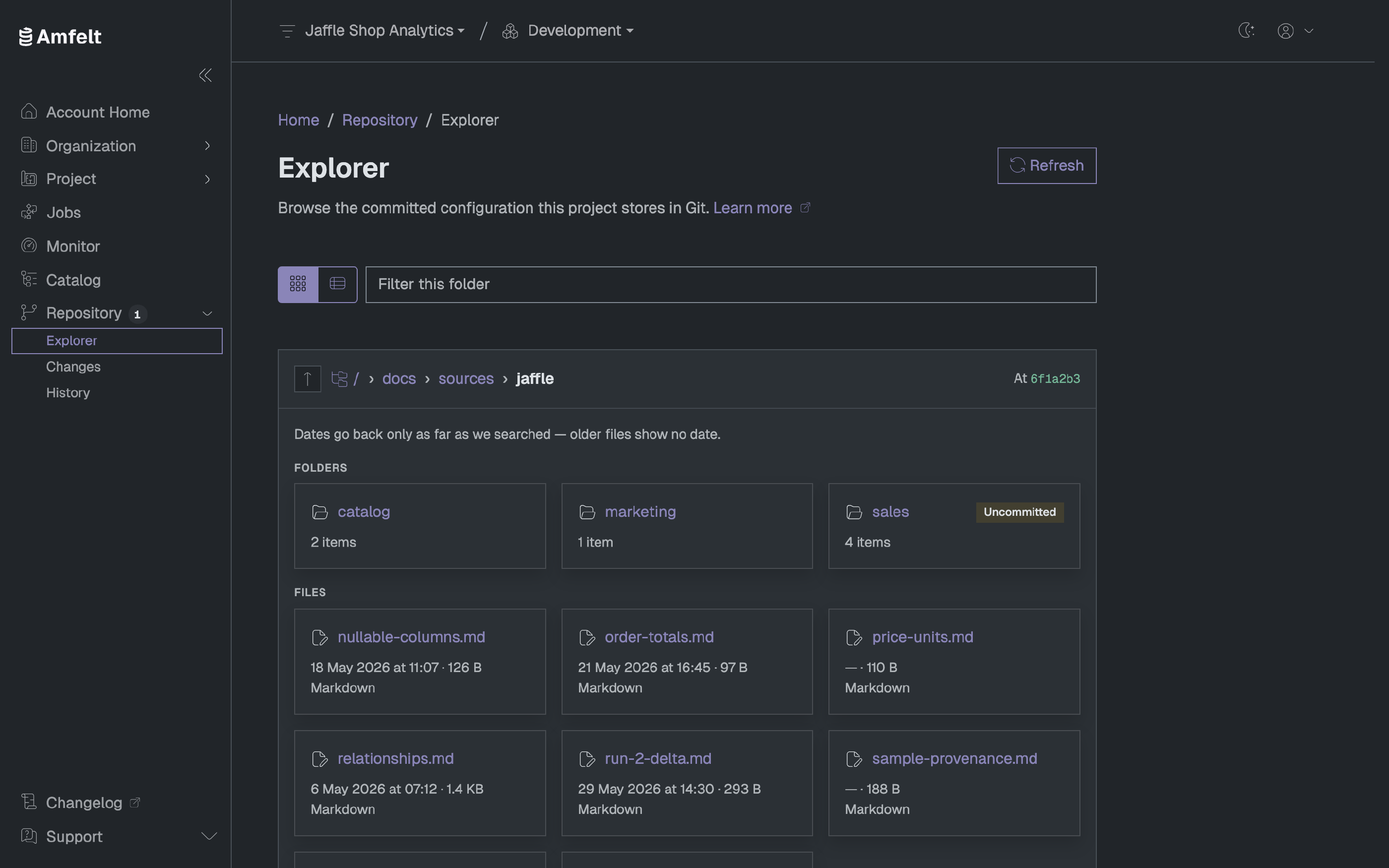
Discovery produces the contracts. With documentation switched on, committing a configuration change regenerates lineage, documentation, and diagrams. No documentation sprint required.
Spot what changed
Every sync checks the extracted schema against its contract, and running discovery again flags each schema change, so a gap between documentation and reality shows up instead of accumulating.
Ground your tools
Markdown docs and machine-readable contracts feed the tools your team (and their AI assistants) already use.
See It in Action
A Catalog Generated From Your Sources.
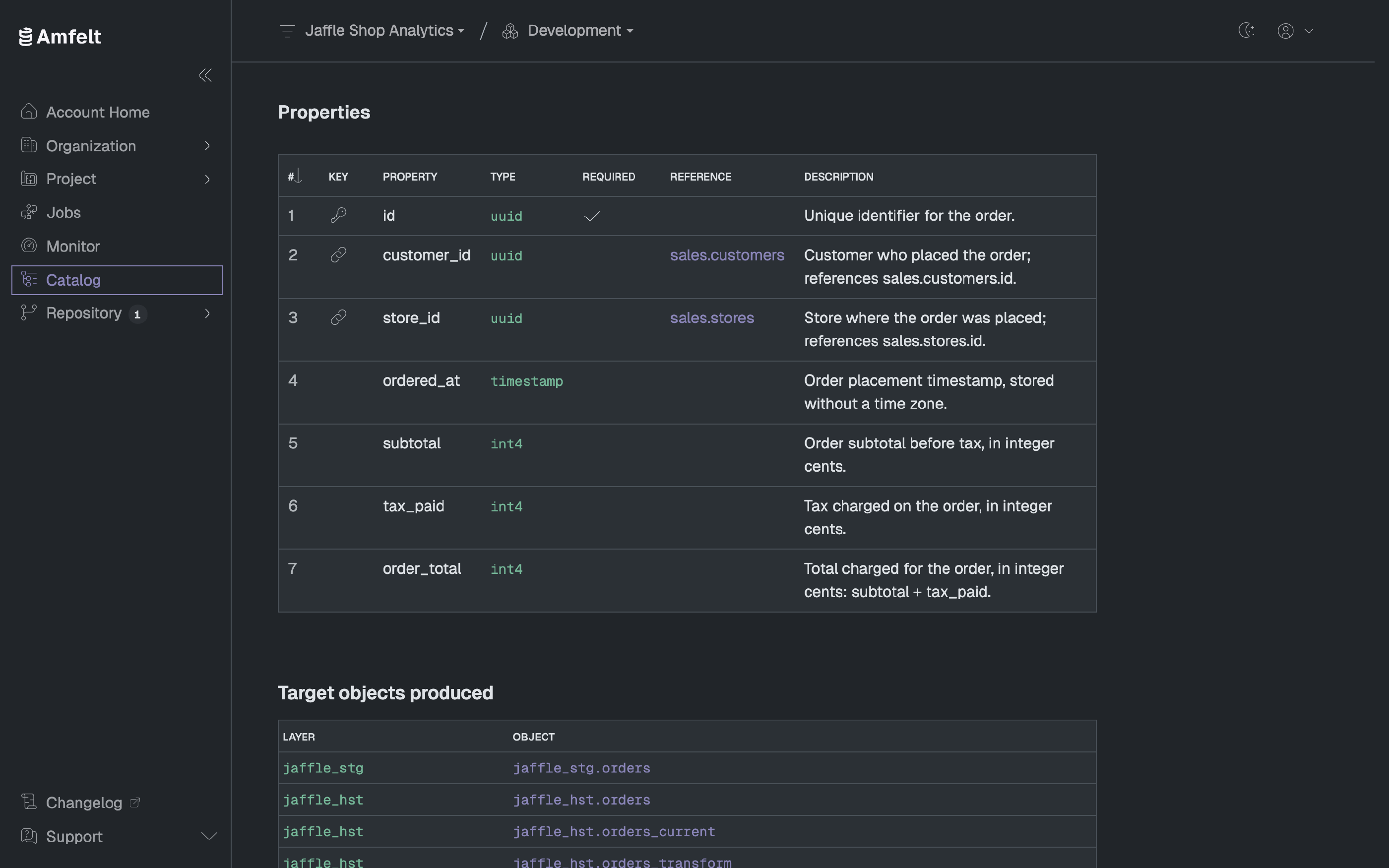
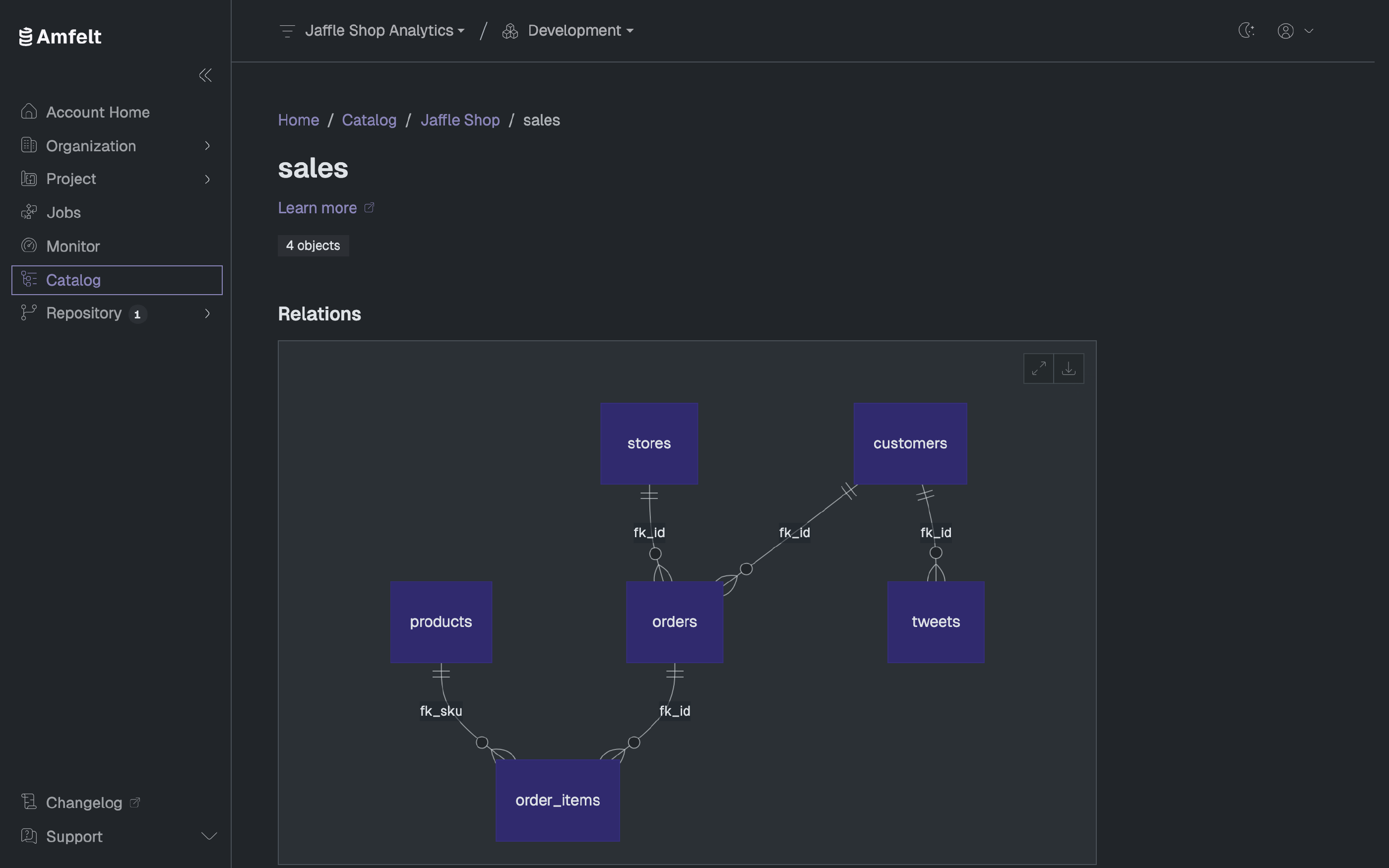
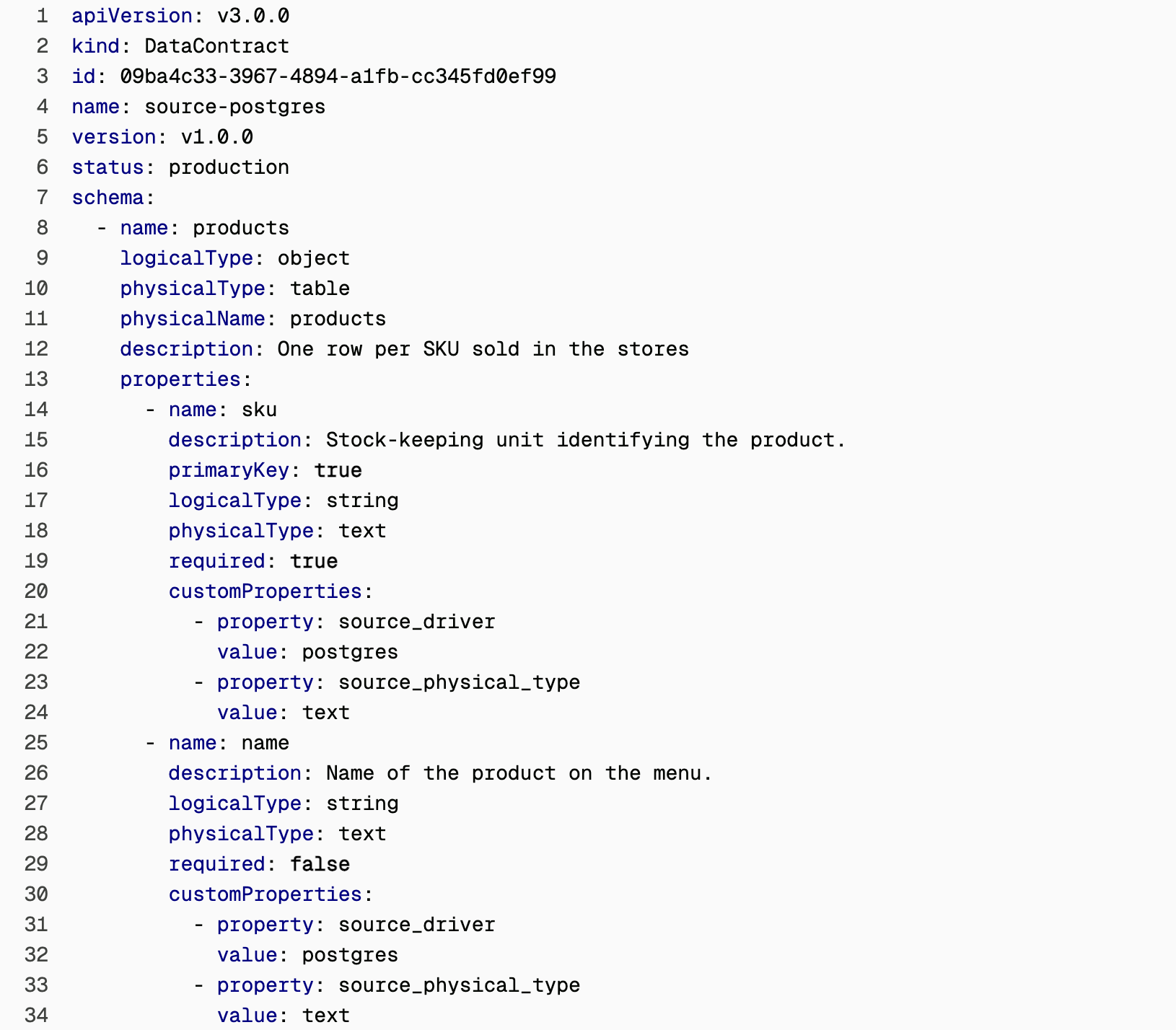
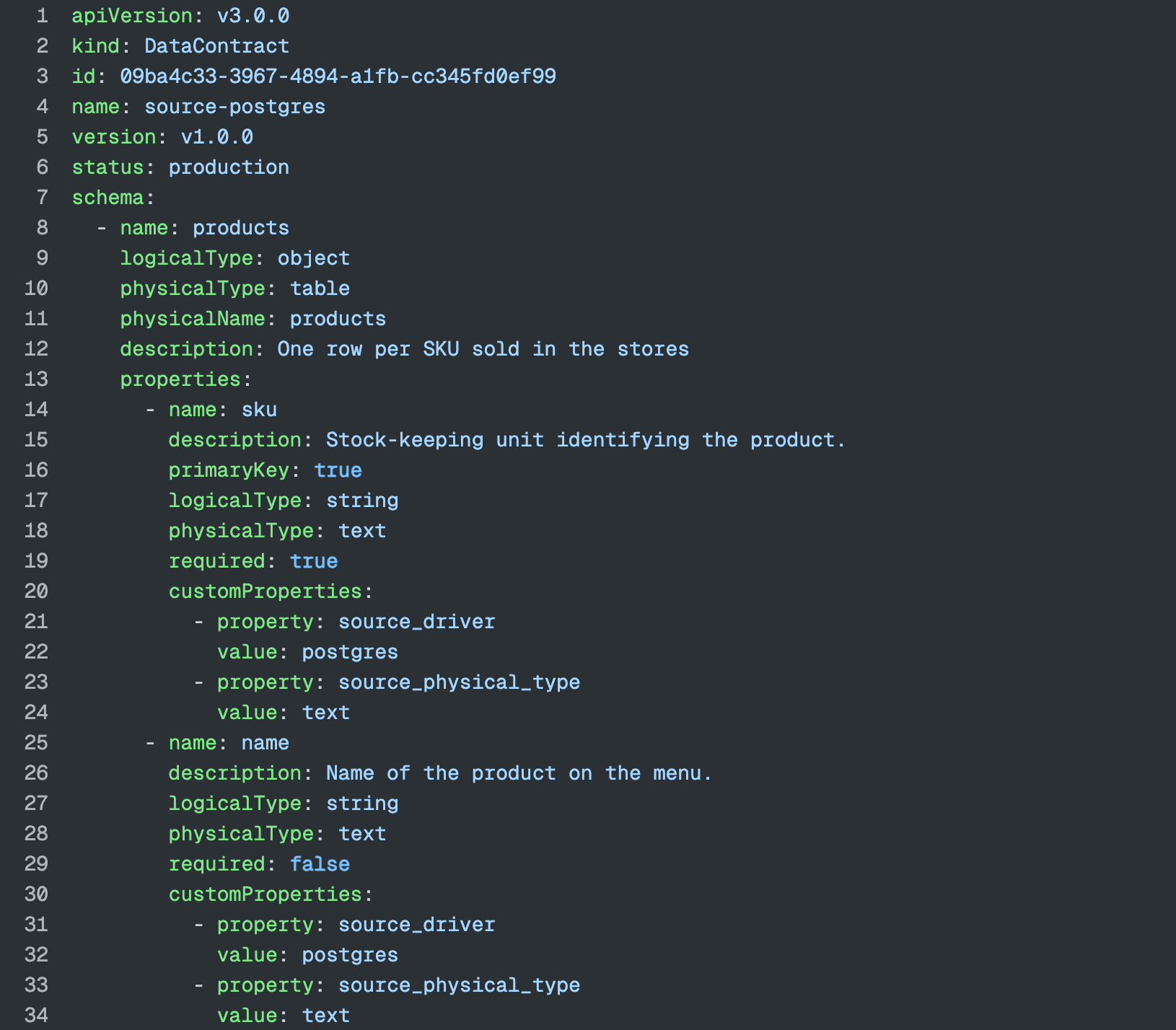
Contracts, relationships, and AI-ready documentation generated from your sources. Run discovery again and the contracts update. With documentation switched on, the next configuration commit regenerates the docs.
Agents Can Only Act on the Context They Are Given.
Once decisions rest on your data, moving it is only part of the job. When agents act on it, ungoverned context stops being an inefficiency and becomes a liability. Trustworthy, current context is the hard part, and Amfelt generates it alongside your pipelines instead of bolting it on afterward.
On the Roadmap
Open Agentic Standards, Next.
Where this is heading: semantic definitions emitted as Apache Ossie artifacts into your platform’s semantic layer, and a governed MCP endpoint over catalog, contracts, and lineage that inherits your existing role-based access. Direction, not shipped product; early customer feedback shapes the order.
From the Blog
I Had to Read the Code to Understand the Data Platform
An incomplete source inventory meant assessing integration code before planning a global warehouse.
FAQ
Common Questions.
Amfelt’s context is generated from your sources and configuration rather than typed in by hand. Every sync checks the extracted schema against its contract: a type change raises a warning, a missing column stops the load, and running discovery again lists new columns.
Open standards throughout: ODCS for contracts, Markdown with Mermaid diagrams for documentation and lineage. Readable by people, parseable by machines.
Yes. Contracts are plain ODCS files in your repository and, with documentation switched on, so are the Markdown docs and diagrams, in formats AI tools already read. Governed programmatic access is roadmap territory, described above.
Ground Your Agents in Data You Can Trust.
Join the waitlist to hear when Amfelt opens to more teams.