Platform · Data Catalog

Context Your Team and AI Agents Can Trust.

Amfelt discovers your sources and generates a catalog from them: versioned data contracts, AI-ready documentation, and visual diagrams. With documentation switched on, documentation and diagrams are regenerated each time you commit a configuration change.

Contract-Based Schema Evolution

Every source is described by an Open Data Contract Standard (ODCS) document, which you commit to Git. Run discovery again and every schema change is detected and graded against the previous version.

AI-Ready Documentation

Objects and properties documented in Markdown, readable by humans and AI agents alike.

Visual Diagrams

Objects and relationships visualized as Mermaid diagrams.

Contract-Based Schema Evolution

Every source is described by an Open Data Contract Standard (ODCS) document, which you commit to Git. Run discovery again and every schema change is detected and graded against the previous version.

AI-Ready Documentation

Objects and properties documented in Markdown, readable by humans and AI agents alike.

Visual Diagrams

Objects and relationships visualized as Mermaid diagrams.

How It Works

From Connection to Catalog Without Writing Code.

Connect a source and run discovery. Amfelt reads the structure of every object and generates a data contract in the catalog, which you review and commit to Git. Run discovery again and Amfelt flags how the source has changed since.

Automatic Schema Discovery.

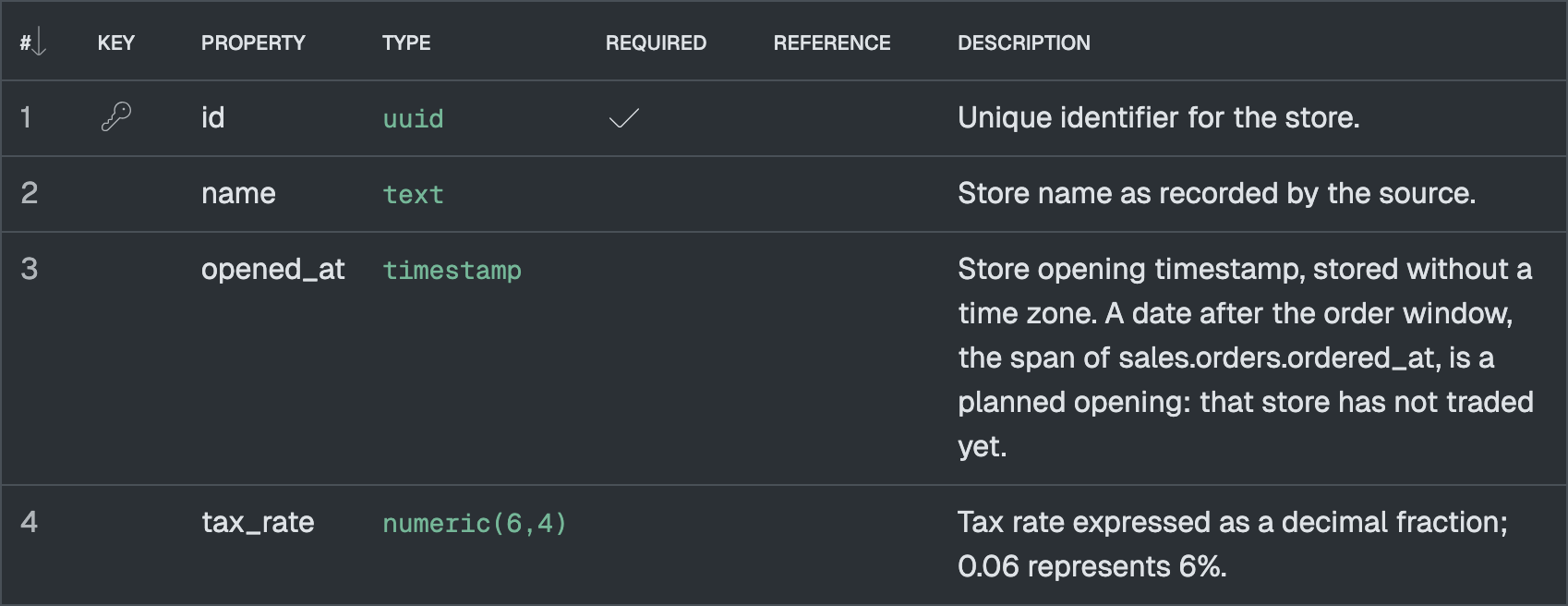
Connect Amfelt to your databases and file sources and run discovery. The agent inspects every table, column, and data type, and describes the schema without a single line of code.
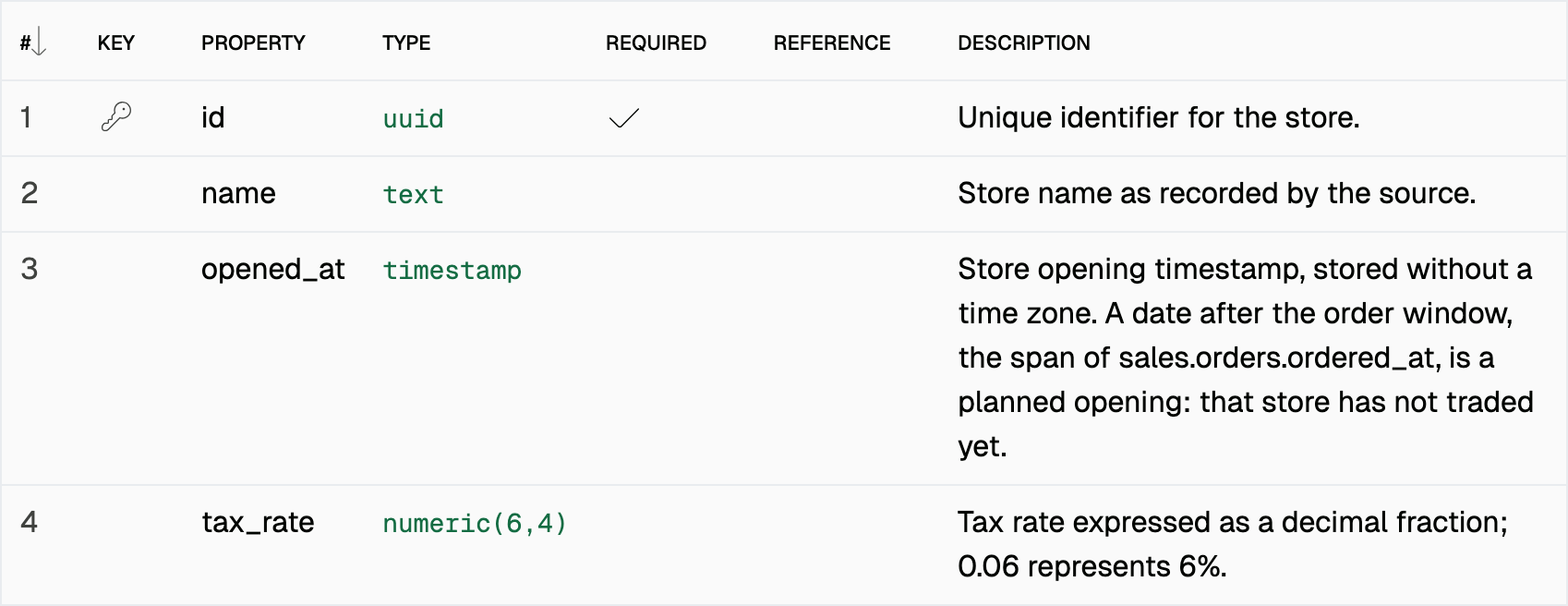
The properties table of the stores object: id, name, opened_at and tax_rate, each with its type and a description, with id marked as the key.

Table-Type Recommendations You Review.

Amfelt uses LLM analysis to recommend a table type for each object, which decides how it is historized: master data that needs historical tracking, transactional data that’s insert-only, or reference data that rarely changes. On selected sources it profiles the data first. You can review each recommendation and accept the ones you agree with; the advisor can apply those it is most sure of.

One row of a job's objects table: stores, with 4 properties, table type Reference data, a badge reading AI suggests: Master data with an Accept link, and history SCD Type 2.

Documentation Generated From Your Configuration.

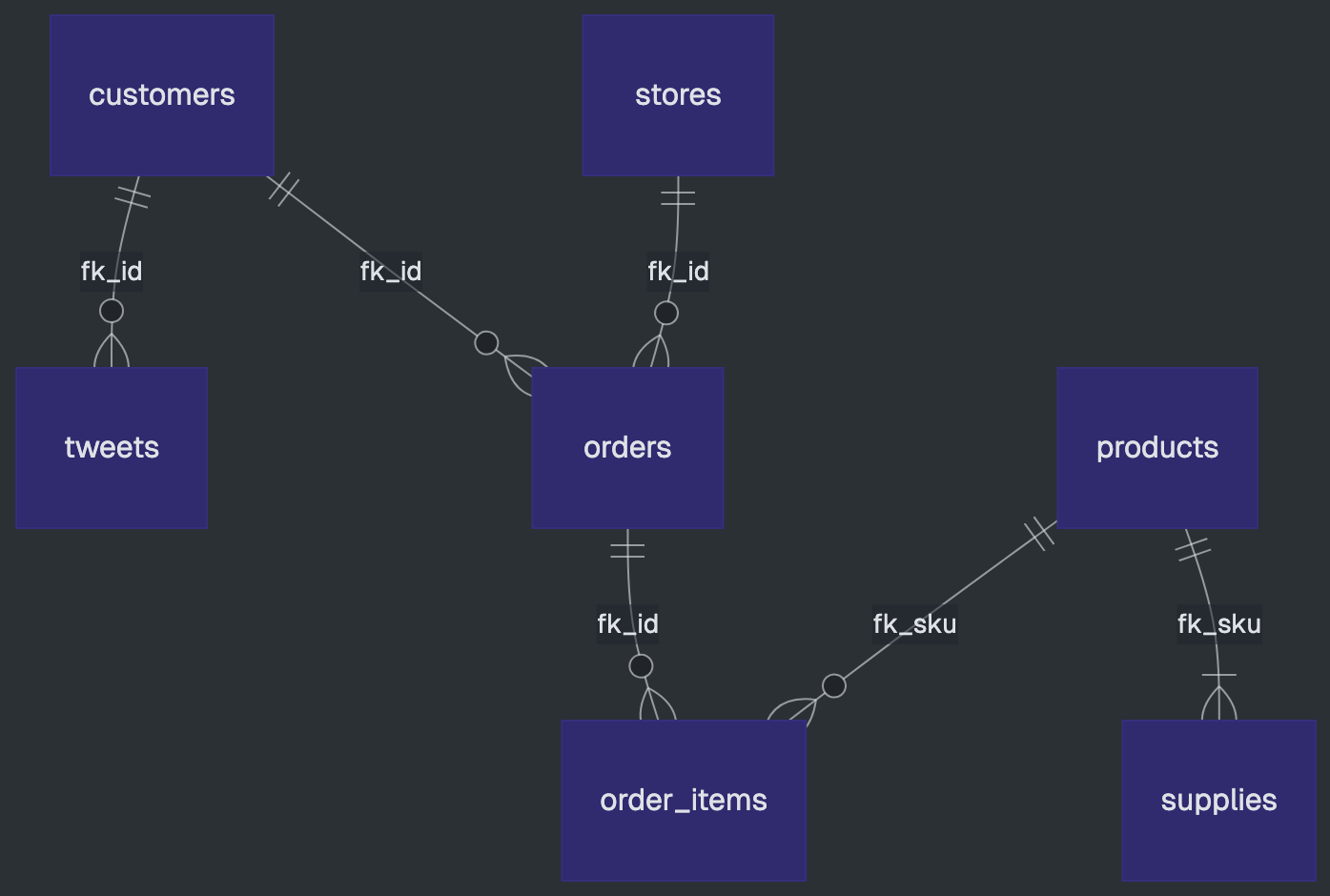
Amfelt generates all documentation in Markdown, including visual diagrams using Mermaid. Available in your Amfelt app, or, once you switch documentation on in the project’s configuration, committed to your Git repository as plain Markdown files laid out for Hugo.
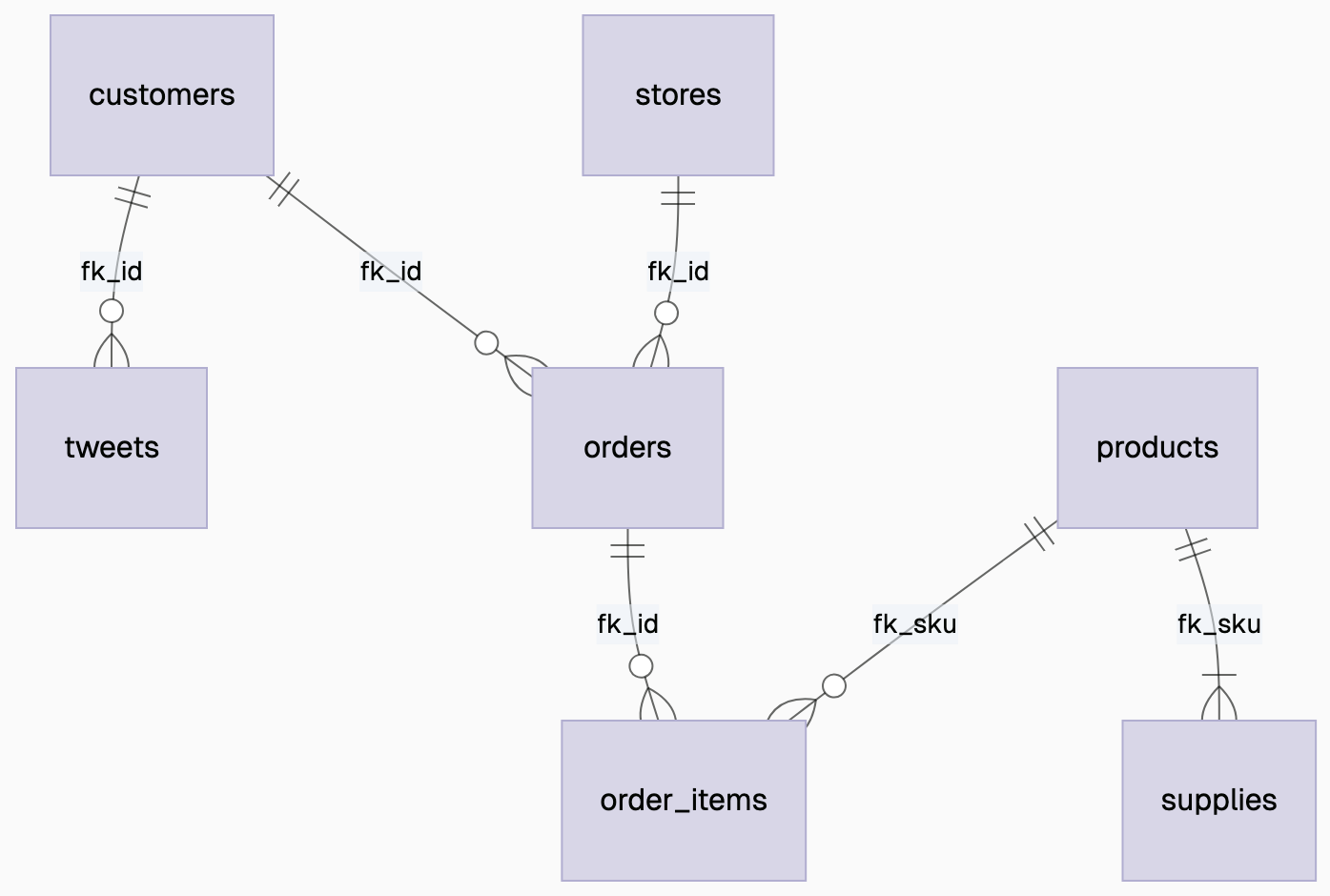
An entity-relationship diagram of the jaffle_stg namespace: customers, stores, tweets, orders, order_items, products and supplies, joined by their foreign keys.

Ready to Automate Your Data Catalog?

Join the waitlist to hear when Amfelt opens to more teams.